Best Non-Toxic Cleaning Products in 2026
Eighteen smarter swaps for the kitchen, bathroom and laundry room—without pretending that “natural” automatically means safe or that your home needs to smell like a chemical cloud to be clean.
Let’s be honest: that sharp “clean” smell is not proof that your home is healthier. It may simply mean a product released fragrance compounds, solvents or other volatile ingredients into the air. The U.S. Environmental Protection Agency says some household products—including cleaners—emit volatile organic compounds, or VOCs. Depending on the chemical and exposure, VOCs can contribute to eye, nose and throat irritation, headaches and nausea; some are associated with more serious long-term health effects.1
This does not mean every conventional cleaner is poison or that every plant-based product is harmless. Risk depends on the ingredient, concentration, ventilation, how often you use it and whether you inhale, swallow or get it on your skin. The smarter goal is to lower unnecessary exposure while still choosing products that actually work.
The four cleaning habits worth changing first
- Spraying everything into the air. Research has associated frequent use of household cleaning sprays with respiratory effects and adult asthma, although observational studies cannot prove that one product caused an individual case.3, 4
- Mixing products. The CDC warns never to mix bleach with ammonia or other cleaners because dangerous vapors can be released.5
- Disinfecting when simple cleaning is enough. Soap, water and physical scrubbing remove dirt and many germs. Disinfectants are a separate step for situations that genuinely require germ killing.6
- Assuming “non-toxic” is a universal guarantee. The FTC says marketers using that term should have reliable evidence that a product is safe for people and the environment.8
The goal is not a sterile-looking house. The goal is a clean home that does not leave you coughing, dizzy or opening every window just to breathe.
What I Looked for in a Safer-Minded Cleaner
For this 2026 guide, I prioritized fragrance-free or lower-fragrance options, plant- and mineral-based formulas, concentrates and refills that reduce packaging, products that avoid unnecessary aerosolization, and reusable tools that let friction do more of the work. I also favored products with clear ingredient or certification information when available.
Kitchen: Six Swaps for Grease, Dishes and Everyday Messes
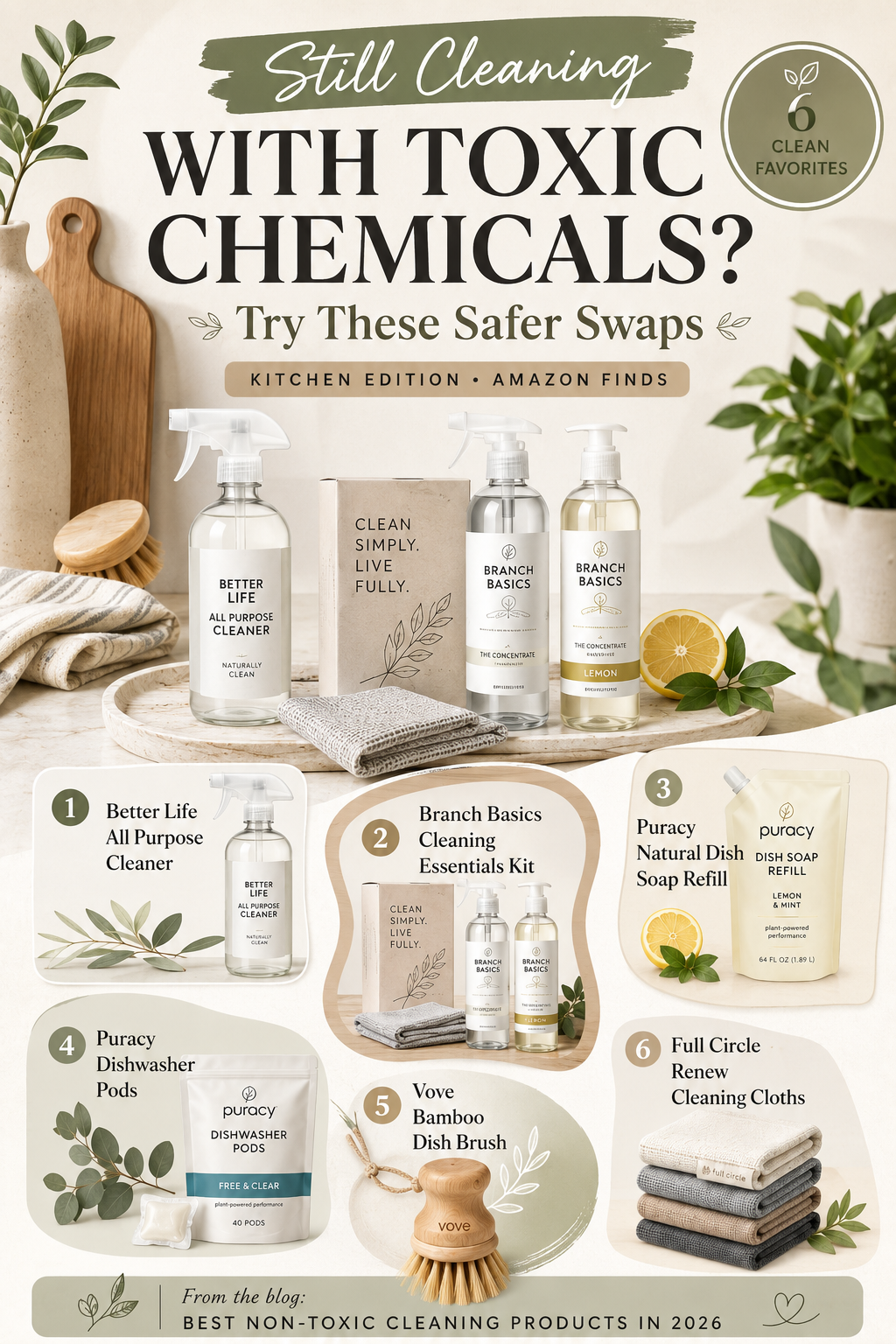
Image note: This original editorial graphic uses stylized product mockups. For individual product photos on your live affiliate post, use your own photography or Amazon-served images through approved Associates tools.
1. Better Life All Purpose Cleaner
A practical swap for counters, appliances and routine messes. The product listing describes it as plant-based and formulated to cut grease and grime across multiple hard surfaces.9
Why it made the list: It replaces several highly scented specialty sprays with one everyday cleaner.
View on Amazon2. Branch Basics Cleaning Essentials Kit
This kit uses one concentrate diluted into separate all-purpose, bathroom and streak-free bottles. Its listing describes the formula as fragrance-free, plant- and mineral-based, and carrying MADE SAFE and EWG Verified certifications.10
Why it made the list: Fewer formulas, refillable bottles and no cloud of added fragrance.
View on Amazon3. Puracy Natural Dish Soap Refill
Puracy markets this refill as a plant-based, clean-rinsing dish soap designed to handle everyday food residue, including in hard water.11
Why it made the list: A refill pouch can reduce the number of rigid pump bottles moving through your home.
View on Amazon4. Puracy Dishwasher Pods
The current listing describes these pods as powered by minerals and plant-derived enzymes and offered in a free-and-clear formula.12
Why it made the list: Premeasured detergent can prevent the “more must clean better” habit that leads to overuse.
View on Amazon5. Vove Bamboo Dish Brush
This FSC-certified bamboo brush is marketed as a durable alternative to disposable plastic dish brushes.13
Why it made the list: Good bristles and a little elbow grease can reduce how much chemical cleaner you need.
View on Amazon6. Full Circle Renew Cleaning Cloths
This washable set includes cloths intended for glass, grease, stainless steel, bath, tile and dusting, and is made with recycled microfiber according to the listing.14
Why it made the list: The right cloth often cleans with less product—and replaces stacks of paper towels.
View on AmazonBathroom: Six Swaps for Soap Scum, Grout and Toilets
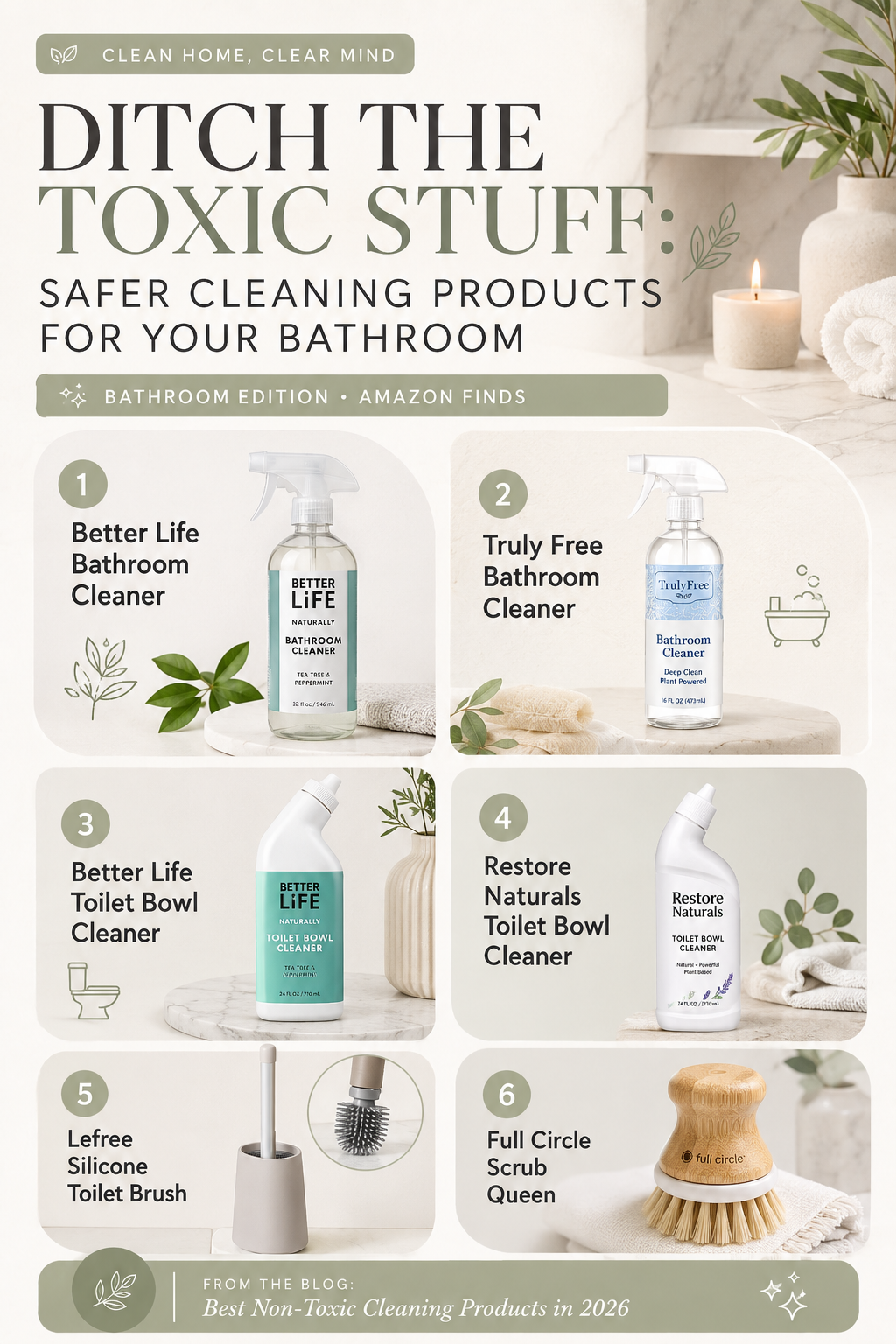
1. Better Life Bathroom Cleaner
This foaming bathroom spray is marketed for tile, grout, fixtures, sinks, tubs, shower doors and curtains without the harsh odor associated with some conventional bathroom cleaners.15
Best for: One-bottle bathroom cleaning instead of a separate tub, tile and sink spray.
View on Amazon2. Truly Free Bathroom Cleaner
The brand describes this cleaner as using concentrated citric acid from lemon peels to loosen soap scum, grime and buildup on bathroom surfaces.16
Best for: Households trying to move away from bleach-forward daily cleaning.
View on Amazon3. Better Life Toilet Bowl Cleaner
This gel is marketed to remove buildup, rings and odors using a plant-based formula.17
Best for: Routine bowl cleaning without reaching automatically for chlorine bleach.
View on Amazon4. Restore Naturals Toilet Bowl Cleaner
Restore Naturals says its formula uses citric acid and biodegradable plant-based solvents to address stains, lime and scale, and is suitable for septic systems when used as directed.18
Best for: Homes dealing with hard-water rings.
View on Amazon5. Lefree Silicone Toilet Brush
The flexible TPR head is designed to reach grooves without scratching glazed toilet surfaces, while the ventilated base helps the brush dry between uses.19
Why it matters: A tool that rinses and dries more easily can reduce odor and grimy buildup in the holder.
View on Amazon6. Full Circle Scrub Queen
This toilet brush uses an under-rim bristle pattern and a ceramic holder with a diatomaceous-earth disk intended to absorb excess moisture.20
Why it made the list: It combines practical hygiene features with a design you do not have to hide.
View on AmazonLaundry: Six Swaps for Clothes, Stains and Fabric Care
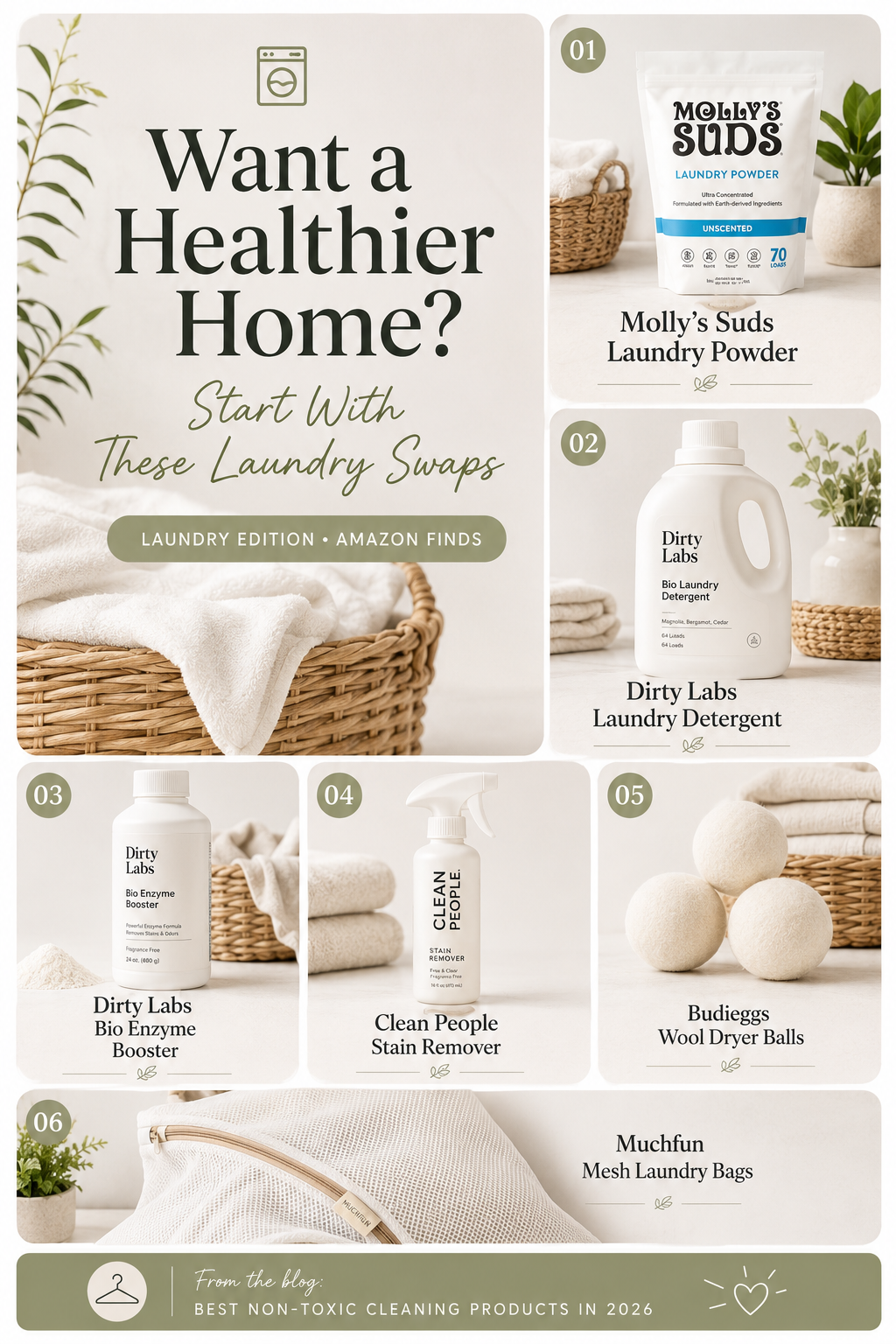
1. Molly’s Suds Laundry Powder
The listing describes this concentrated powder as free from added perfumes, optical brighteners, phosphates and SLS/SLES, with one tablespoon recommended per load.21
Best for: Fragrance-sensitive households and anyone tired of hauling oversized detergent jugs.
View on Amazon2. Dirty Labs Scent-Free Laundry Detergent
Dirty Labs markets this concentrated detergent as fragrance- and dye-free, biodegradable and compatible with high-efficiency machines.22
Best for: People who prefer liquid detergent but want to skip perfume-heavy formulas.
View on Amazon3. Dirty Labs Bio Enzyme Booster
This scent-free booster is marketed as a concentrated enzyme treatment for stains and odors in both standard and HE machines.23
Best for: Gym clothes, towels and stubborn odors that tempt you to pour in more detergent than you need.
View on Amazon4. Clean People Stain Remover
The brand describes this spray as using plant-based enzymes without harsh chemicals and markets it for washable-fabric stains including oil, wine, makeup and baby messes.24
Best for: Treating the stain instead of chemically overloading the entire wash.
View on Amazon5. Budieggs Wool Dryer Balls
These reusable balls are marketed as 100% New Zealand wool with no synthetic fillers or added chemicals, designed to soften laundry and improve air circulation in the dryer.25
Best for: Replacing fragranced dryer sheets and disposable fabric-softening products.
View on Amazon6. Muchfun Mesh Laundry Bags
These honeycomb mesh bags are designed to protect delicate clothing from stretching, snagging and abrasion during washing and drying.26
Why it belongs here: Extending the life of clothing is part of a lower-waste laundry routine—even though the bag itself is an accessory, not a cleaning formula.
View on AmazonDo You Really Need to Disinfect Everything?
No. The CDC distinguishes cleaning—using water, soap and scrubbing to remove germs, dirt and impurities—from disinfecting, which uses chemicals to kill remaining germs.6 For normal everyday messes, cleaning is often the correct first move. Save disinfectants for situations where they are actually warranted, follow the label’s contact time, ventilate the space and never combine products.
Quaternary ammonium compounds, often called “quats,” are common disinfectant ingredients. Reviews and occupational studies have raised respiratory and skin concerns, including associations with work-related asthma, although the evidence varies by compound, exposure and study design.7 That is a reason for thoughtful use—not panic.
A safer weekly cleaning rhythm
- Open a window or run the exhaust fan before you start.
- Use a damp cloth instead of misting a spray across the room whenever practical.
- Let scrubbing tools, warm water and dwell time do more of the work.
- Wear gloves when the label recommends them or when your skin is sensitive.
- Never mix cleaners—not even “natural” vinegar with bleach.
- Store every product in its original container and out of children’s reach.
The Bottom Line
You do not have to throw away every bottle under your sink tonight. Start with the products you use most often and inhale most directly: your all-purpose spray, bathroom cleaner and laundry detergent. Then replace disposable tools as they wear out.
A healthier cleaning routine is not about chasing perfection. It is about reducing avoidable fumes, using fewer overlapping formulas and choosing products that tell you more—not less—about what is inside.
Frequently Asked Questions
Are “non-toxic” cleaners completely risk-free?
No product is automatically safe in every dose or every situation. Even plant-derived ingredients can irritate skin, eyes or lungs. Read the label, use the recommended amount and keep products away from children and pets.
Do these products disinfect?
Most products in this guide are cleaners, not EPA-registered disinfectants. That is fine for routine dirt and messes. When disinfection is medically or hygienically necessary, use an appropriate registered product exactly as directed.
What is the single best first swap?
Replace the spray you use most often with a fragrance-free or lower-fragrance concentrate, and apply it to a cloth instead of spraying it into the air.
Can I mix bleach with vinegar because vinegar is natural?
No. Never mix bleach with vinegar, ammonia or other cleaners. Dangerous gases can form.5
Sources and Product References
- U.S. EPA: Volatile Organic Compounds’ Impact on Indoor Air Quality.
- NIEHS: Indoor Air Quality.
- Zock et al.: The Use of Household Cleaning Sprays and Adult Asthma.
- Clausen et al.: Chemicals Inhaled From Spray Cleaning and Disinfection Products and Their Respiratory Effects.
- CDC: Cleaning and Disinfecting With Bleach.
- CDC: How to Clean and Disinfect.
- Arnold et al.: Quaternary Ammonium Compounds—A Chemical Class of Emerging Concern.
- FTC: Environmental Claims and “Non-Toxic” Marketing Guidance.
- Better Life All Purpose Cleaner listing.
- Branch Basics Cleaning Essentials Kit listing.
- Puracy Natural Dish Soap Refill listing.
- Puracy Dishwasher Pods listing.
- Vove Bamboo Dish Brush listing.
- Full Circle Renew Cleaning Cloths listing.
- Better Life Bathroom Cleaner listing.
- Truly Free Bathroom Cleaner listing.
- Better Life Toilet Bowl Cleaner listing.
- Restore Naturals Toilet Bowl Cleaner listing.
- Lefree Silicone Toilet Brush listing.
- Full Circle Scrub Queen listing.
- Molly’s Suds Laundry Powder listing.
- Dirty Labs Scent-Free Laundry Detergent listing.
- Dirty Labs Bio Enzyme Booster listing.
- Clean People Stain Remover listing.
- Budieggs Wool Dryer Balls listing.
- Muchfun Mesh Laundry Bags listing.